Pass Inspection and Quiet the Roar
Exhaust & Emissions in Derry for vehicles that fail state tests or rumble louder than normal
John's Auto Repair LLC handles Exhaust & Emissions work in Derry for drivers who hear a loud roar when they accelerate, smell exhaust fumes inside the cabin, or receive a failed emissions report at inspection time. Your exhaust system routes hot gases away from the engine, reduces noise, and treats emissions to meet state standards, and when pipes corrode, gaskets blow out, or catalytic converters fail, your vehicle becomes louder, less efficient, and unable to pass the tests required for registration.
This service includes inspecting the entire exhaust path from the manifold to the tailpipe, checking for leaks, corrosion, and failing oxygen sensors or catalytic converters, and replacing components that no longer seal properly or process emissions within legal limits. New Hampshire winters accelerate rust on exhaust pipes and mufflers through road salt exposure and condensation that forms during short trips, while failed sensors trigger check engine lights and cause the engine to run rich or lean, wasting fuel and damaging downstream components.
If you notice a hissing sound under the vehicle, a sulfur smell from the tailpipe, or a check engine light with emissions-related codes, schedule an exhaust inspection before your next state test.
How Exhaust Repairs Restore Efficiency and Compliance
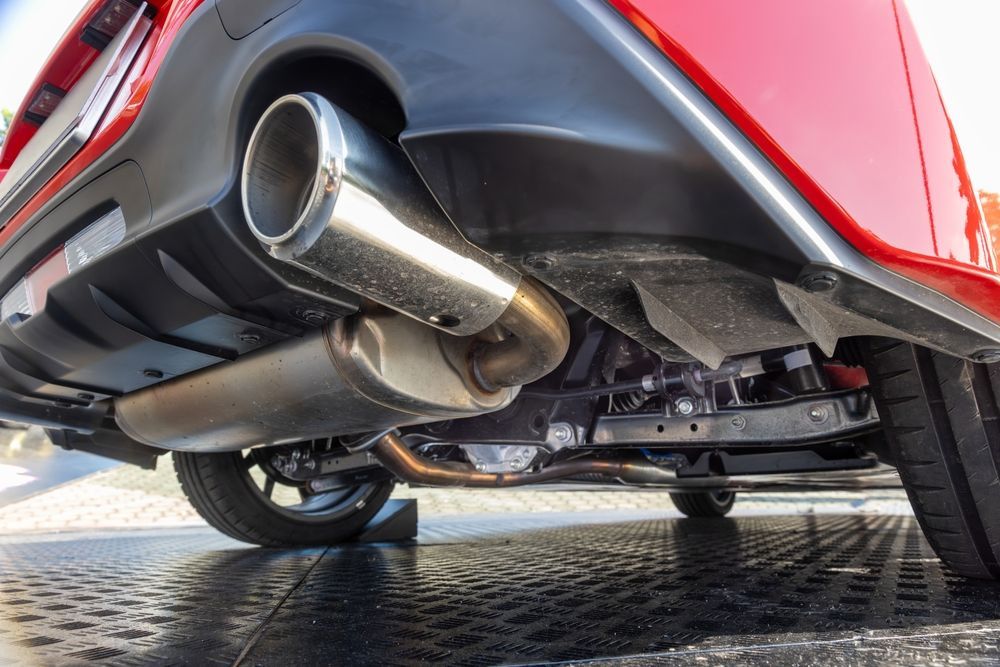
When you bring your vehicle in, a technician lifts it and inspects exhaust pipes, hangers, flex joints, and the catalytic converter for rust holes, loose clamps, and broken welds. A scan tool reads oxygen sensor data and monitors catalytic converter efficiency to determine whether sensors are reading accurately and whether the converter is processing emissions within the required range, and a visual inspection identifies leaks that let untreated gases escape before they reach emission control devices.
After the repairs are finished, your vehicle will run quieter without the roar or hiss that signals a leak, your cabin will stay free of exhaust odors, and your engine will operate at the correct air-fuel ratio because oxygen sensors are feeding accurate data to the computer. John's Auto Repair LLC clears diagnostic codes and test-drives the vehicle to confirm that the check engine light stays off and that exhaust flow matches factory specifications, so your vehicle will pass state emissions testing without issues.
Exhaust work cannot fix engine problems that cause excessive oil consumption or misfires, so if your vehicle burns oil or runs rough, those issues must be addressed separately before emissions levels return to normal. Replacing a catalytic converter on an engine that burns oil will result in another failed converter within months, so diagnostics focus on finding the root cause before installing new parts.
What Drivers Need to Know About Exhaust Systems
Drivers often ask how long exhaust components last and what symptoms point to specific failures in the system.
What causes a catalytic converter to fail?
A converter fails when it becomes clogged with carbon from oil or coolant burning in the engine, when it overheats due to misfires that send unburned fuel into the exhaust, or when impact damage cracks the ceramic substrate inside the housing.
How do I know if my exhaust has a leak?
You will hear a louder-than-normal rumble or hissing sound during acceleration, feel vibration through the floor or pedals, or smell exhaust fumes inside the cabin, especially when idling or driving uphill with the windows closed.
Why does my check engine light come on after exhaust work?
The light may appear if oxygen sensors were disturbed during installation and need time to recalibrate, or if a leak remains that allows unmetered air into the exhaust stream and skews sensor readings.
When should I replace oxygen sensors?
Replace sensors when they respond slowly to changes in air-fuel ratio, when they report implausible voltages, or every 100,000 miles as preventive maintenance, since degraded sensors reduce fuel economy and increase emissions even before they fail completely.
How does Derry weather affect exhaust lifespan?
Salt from winter roads clings to hot exhaust pipes and accelerates rust-through on mufflers and resonators, while short trips in cold weather cause moisture to condense inside the system and corrode pipes from the inside, so vehicles driven mainly in winter or for short distances often need exhaust repairs sooner than those used for highway commutes.
If your vehicle sounds louder than it should or if you see smoke that smells like rotten eggs, bring it in for an exhaust and emissions inspection to address the problem before it leads to a failed state test or engine damage.